

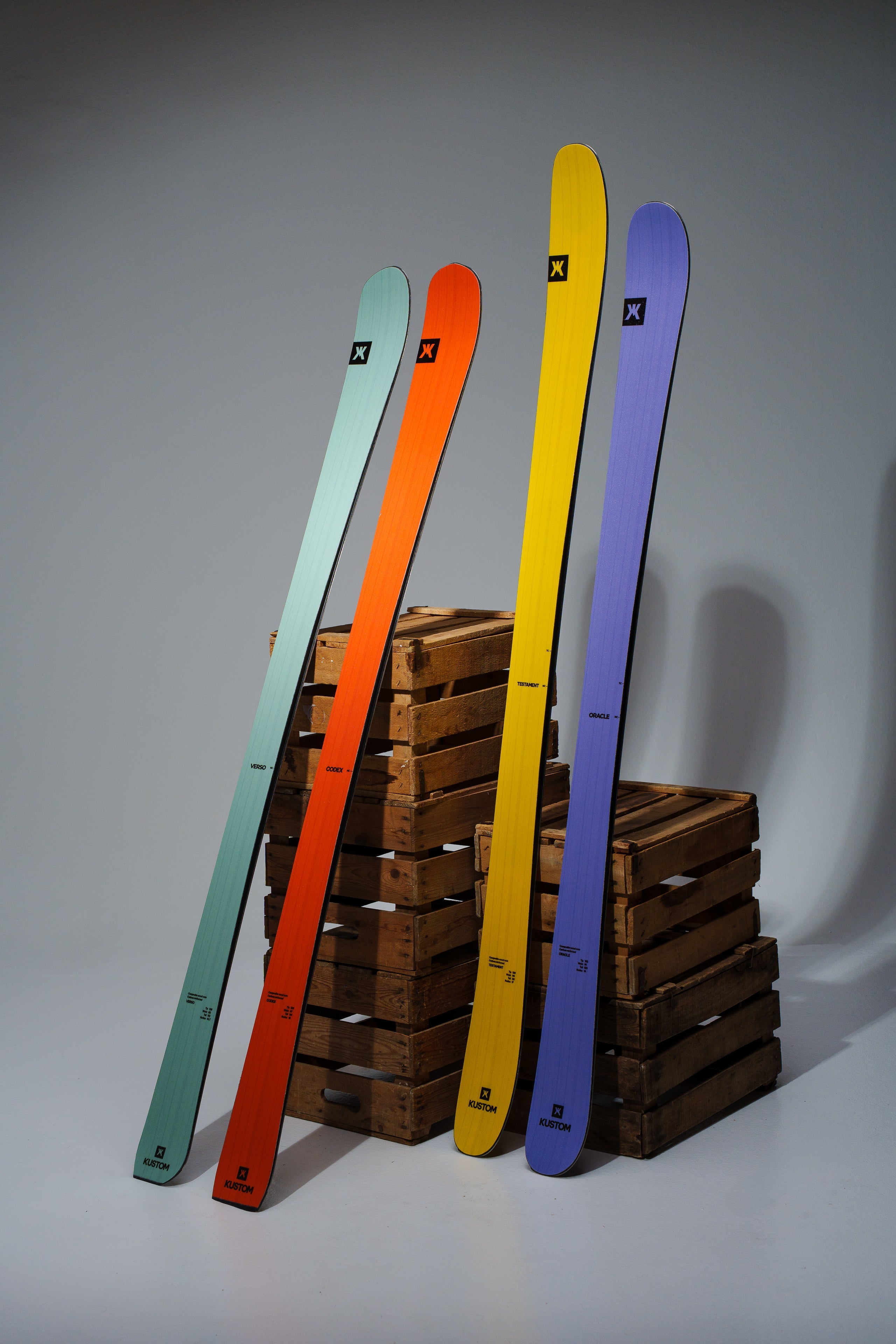
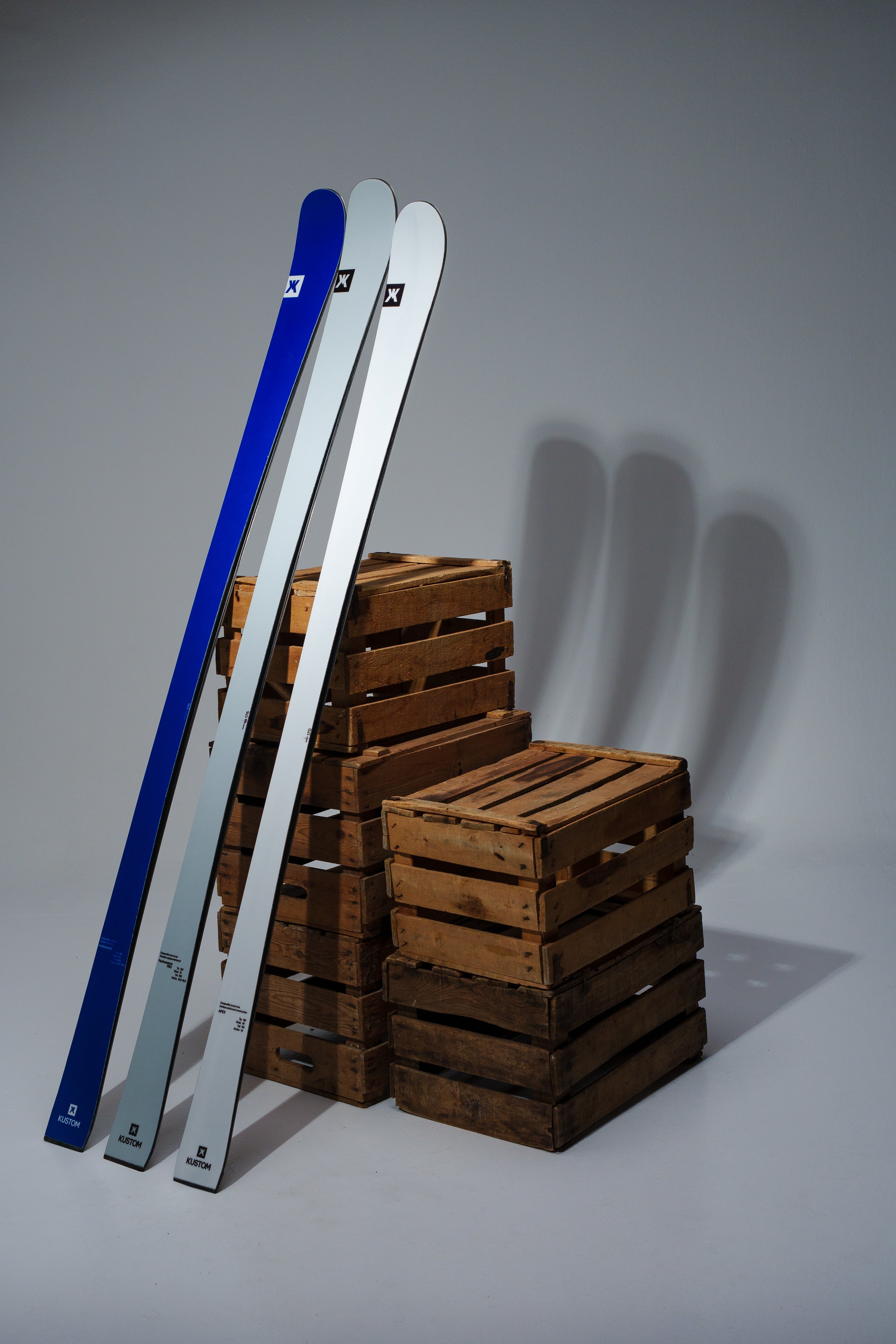
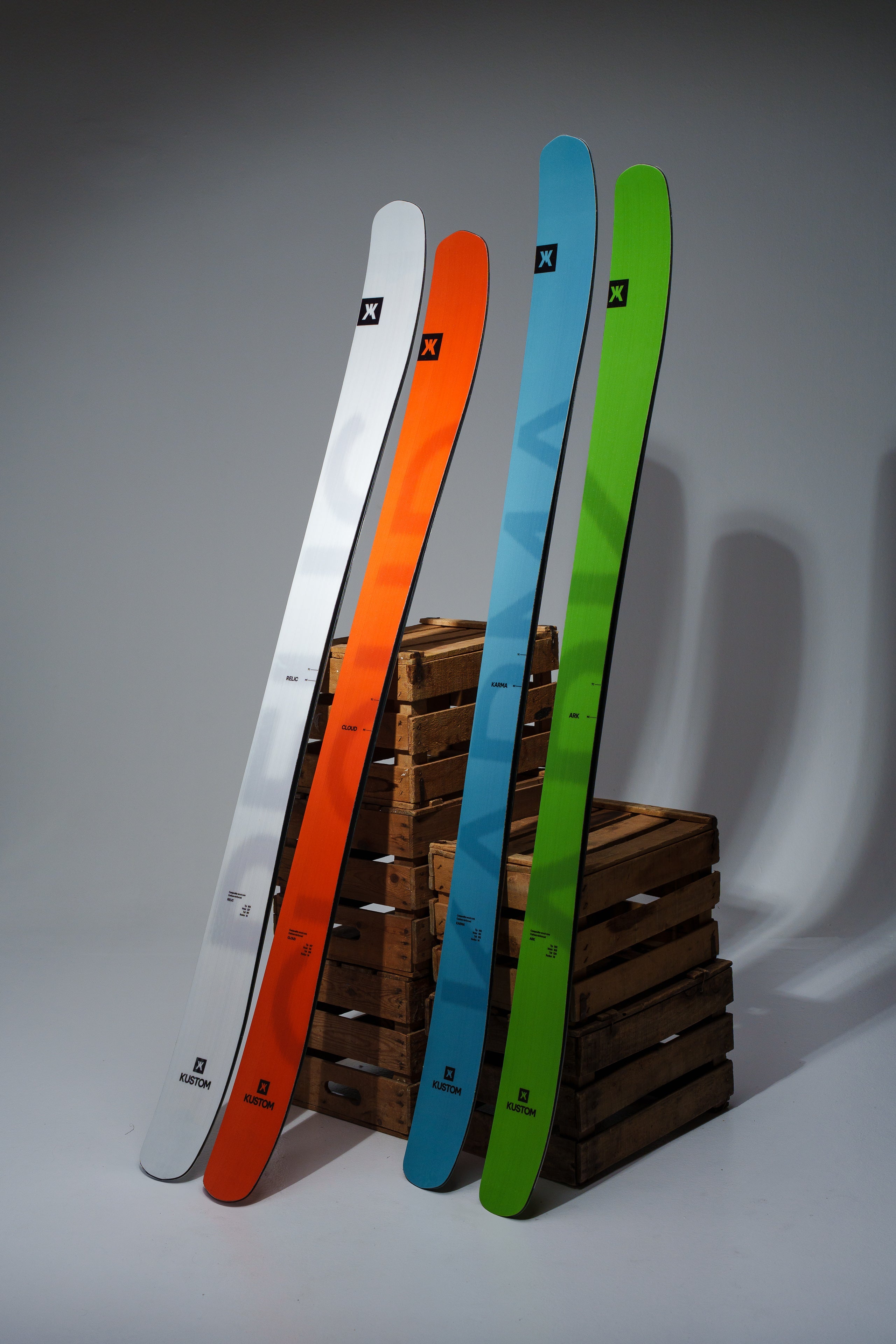
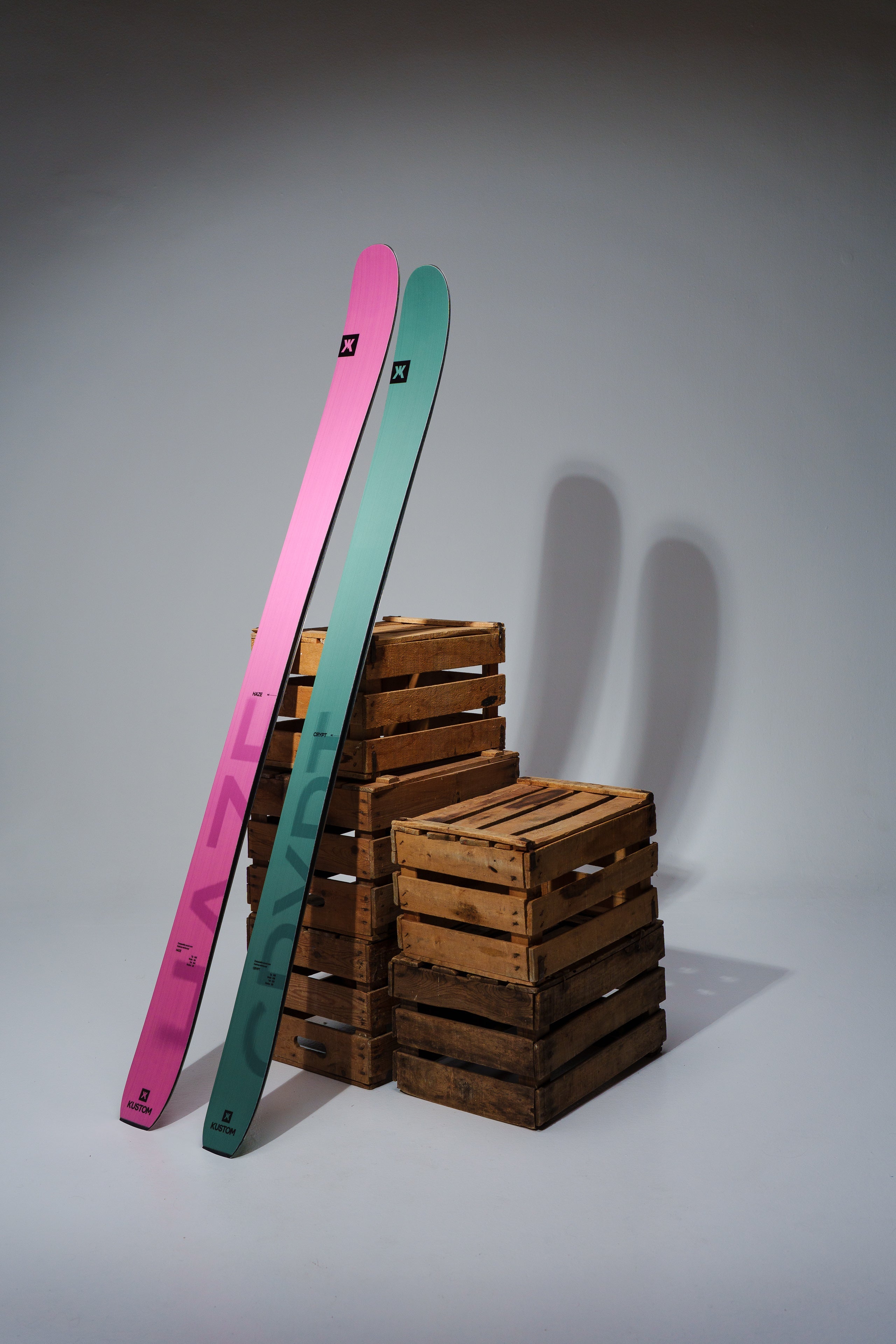

When a ski feels stable, responsive, or predictable, it's not by chance. It's not just a matter of geometry or turning radius. It's a direct result of the materials it's made of and how they're arranged inside. A ski's personality is born in its construction, long before it touches the snow.
At KUSTOM®, each model begins with a clear decision about what it should do on the mountain. And that decision translates into a specific combination of woods, fibers, and reinforcements.
Sandwich construction: the starting point
Sandwich construction remains the gold standard when serious performance is desired. It is based on overlapping layers around a central core, where each material fulfills a specific function. This architecture allows for precise control of stiffness, torsion, and power transmission to the edge.
The advantage of this system is its consistency. It's not about adding more layers, but about strategically placing them so they work together. The result is a ski that responds predictably and consistently, even when the snow conditions change.
The core
The core is the structural heart of the ski. It largely determines the weight, vibration absorption, and longitudinal flex.
At KUSTOM we work with three main types of wood:
-
Paulownia , extremely lightweight, ideal when looking for agility and less fatigue without sacrificing too much stability.
-
Ash , denser and more resistant, which provides power and a feeling of firm support under the foot.
-
Beech , balanced and consistent, capable of offering stability without excessively hardening the whole.
The proportions and placement of these woods completely change the final performance. A core designed for lightness and responsiveness is not the same as one designed to sustain speed and constant pressure.
Triaxial carbon and fiberglass
Fibers are added to the core, which decisively influence torsional rigidity and the way the ski maintains its edge during turns.
The fiberglass provides a progressive and controlled feel. It helps dampen vibrations and offers stable handling on uneven snow.
Triaxial carbon , on the other hand, introduces lightness and very high specific stiffness. When well integrated, it improves power transmission and immediate response when leaning. The ski becomes more precise, more responsive, and more efficient in its support.
In our freeride and big mountain models, triaxial carbon allows us to maintain stability and responsiveness even in deep snow or on more aggressive terrain. The key is balance: too much carbon can make the ski twitchy; combined correctly, it provides clarity and control.
Titanal
We are starting to develop prototypes with reinforcements of titanal, a metal alloy used in skis designed for high speed and hard snow.
Titanal offers a very specific quality: calmness. It reduces vibrations, increases stability, and provides a more solid feel when the pace picks up. It obviously adds weight, but it also improves stability in demanding conditions.
It is not a change in philosophy, but a natural evolution when seeking to broaden the range of behavior without losing coherence.
Stiffness, torsion, and what you really feel under your feet
People often talk about "hard skis" or "soft skis" without distinguishing between the two. In reality, two key variables are involved:
-
Longitudinal stiffness , which determines how the ski bends on its long axis and affects absorption and progressiveness.
-
Torsional rigidity , which influences how the ski maintains its edge and transmits power to the turn.
The core has more influence on flex; the fibers and reinforcements on torsion. The balance between the two defines whether a ski will be stable without becoming excessively rigid, or responsive without being unpredictable.
When the snow changes, the materials speak
In perfect conditions, almost any ski will work. It's in variable snow—hard in the morning, transformed at midday, uneven in the afternoon—where the ski's construction makes the difference.
A well-calibrated combination of wood, glass, and carbon allows for the absorption of irregularities without sacrificing responsiveness. A metal reinforcement can reduce vibrations as speed increases. A lightweight core reduces fatigue during long rides.
The goal is not for the skiing to be spectacular in a single setting, but for it to be consistent throughout the day.
There is no universal recipe.
There is no perfect material. What exists is a suitable combination for each type of ski and each type of skier.
Two models with the same seat width can feel completely different if the proportion of paulownia and ash, the orientation of the triaxial carbon, or the presence of titanal changes. The difference isn't on the label, but in the internal structure.
At KUSTOM®, every equipment choice is tested on real snow. Because materials aren't just an isolated technical argument: they're what determines whether the ski inspires confidence when you push hard, holds its line when the terrain gets tricky, and continues to perform as the day drags on.
That's where materials stop being theory and become real behavior.

