

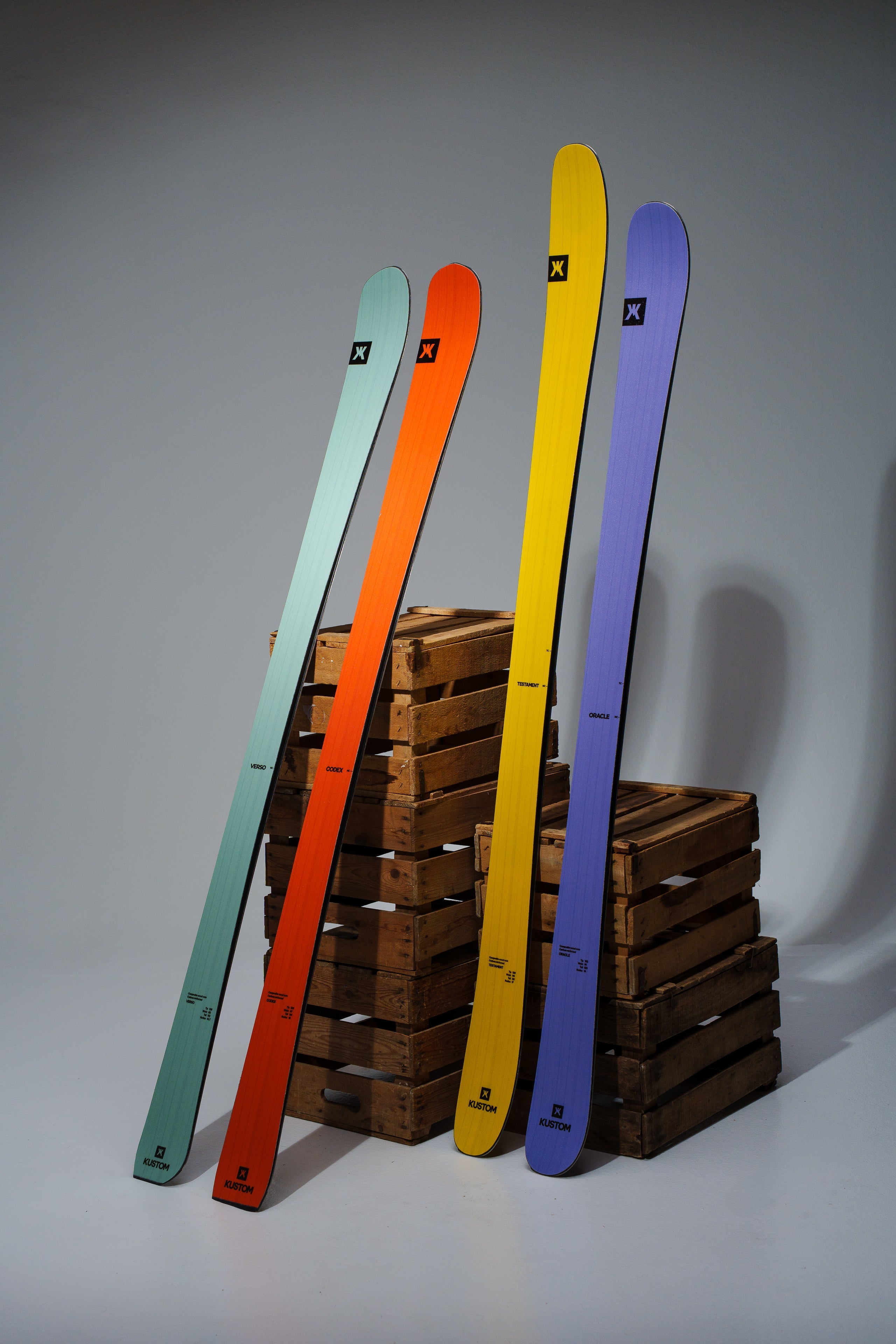
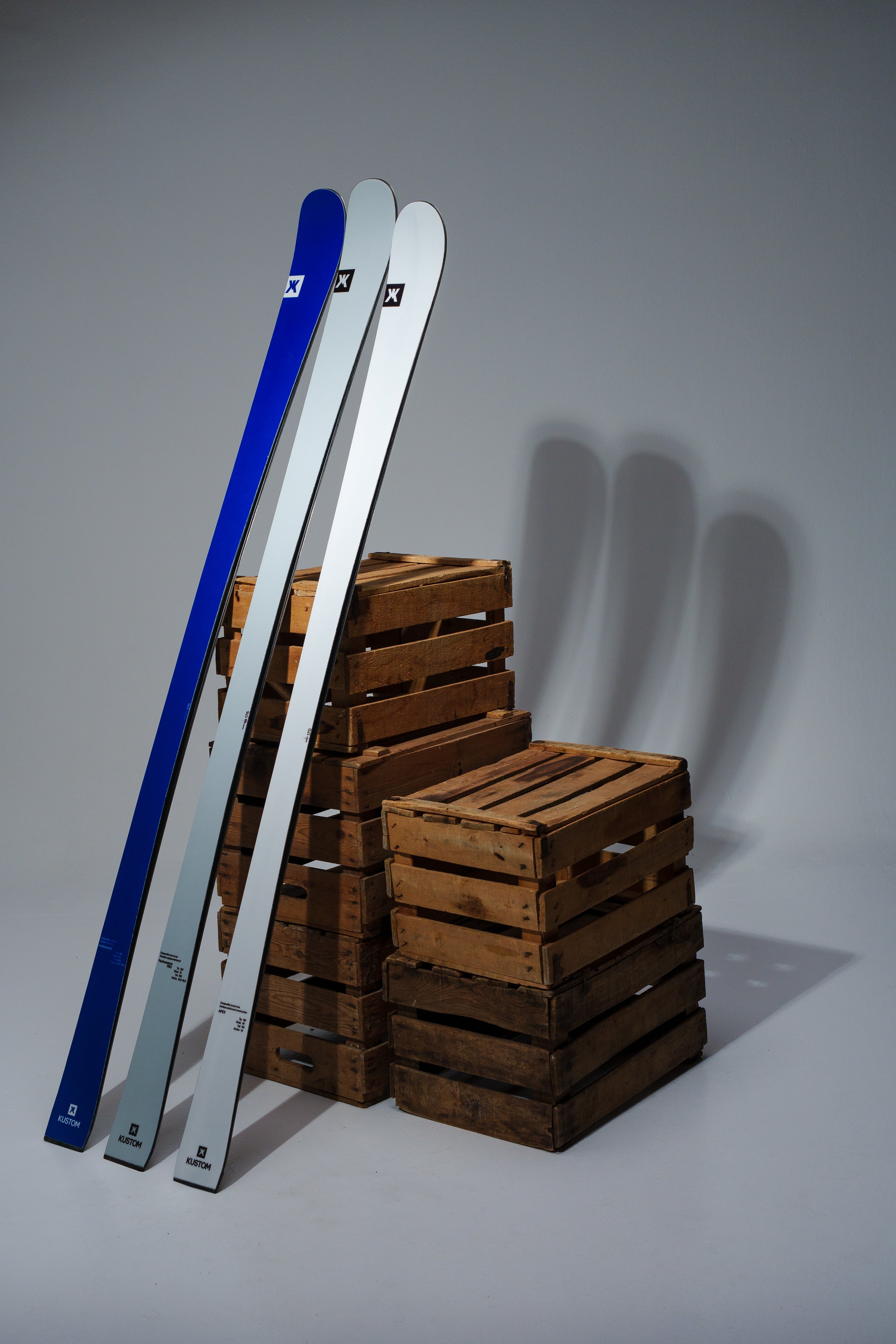
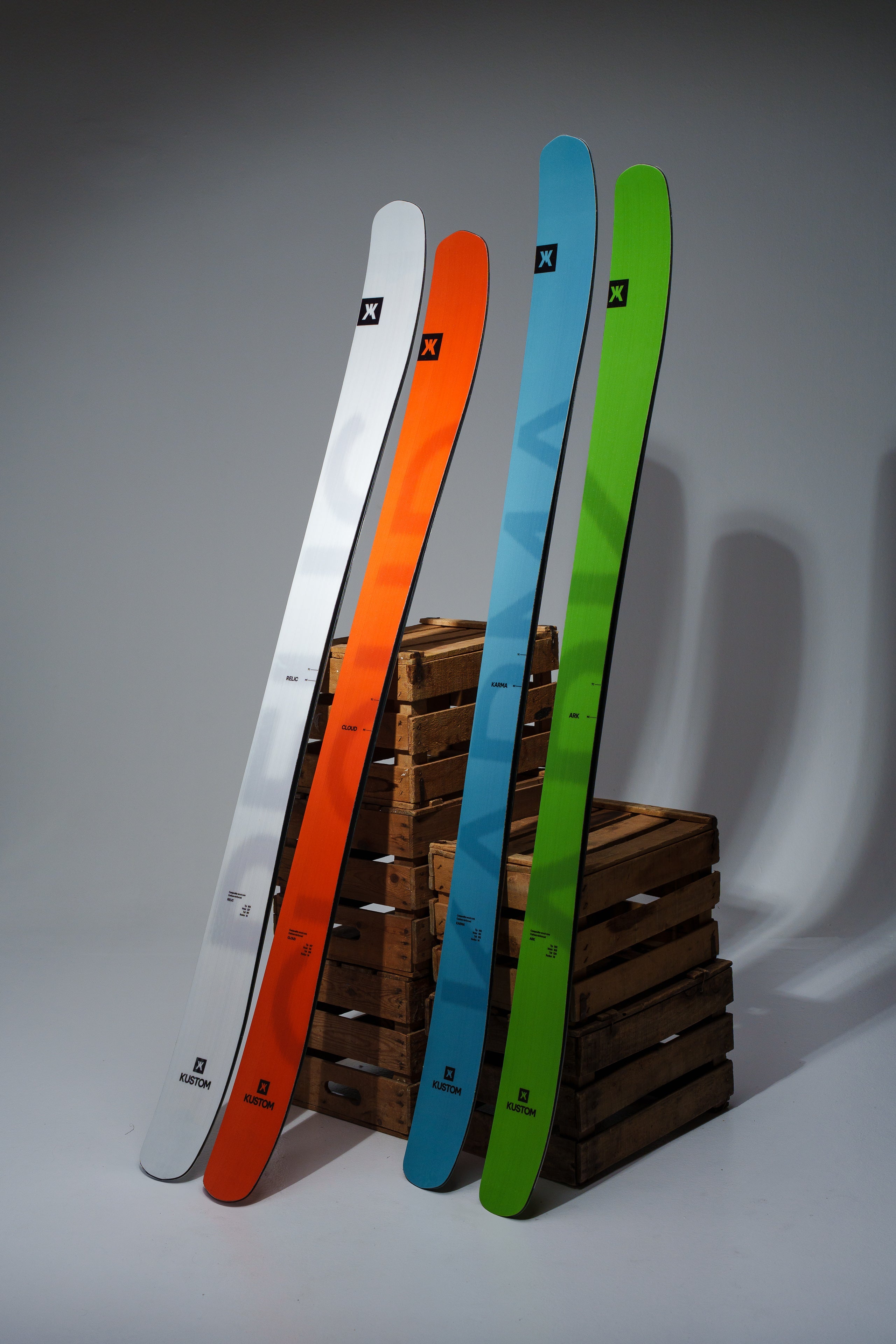
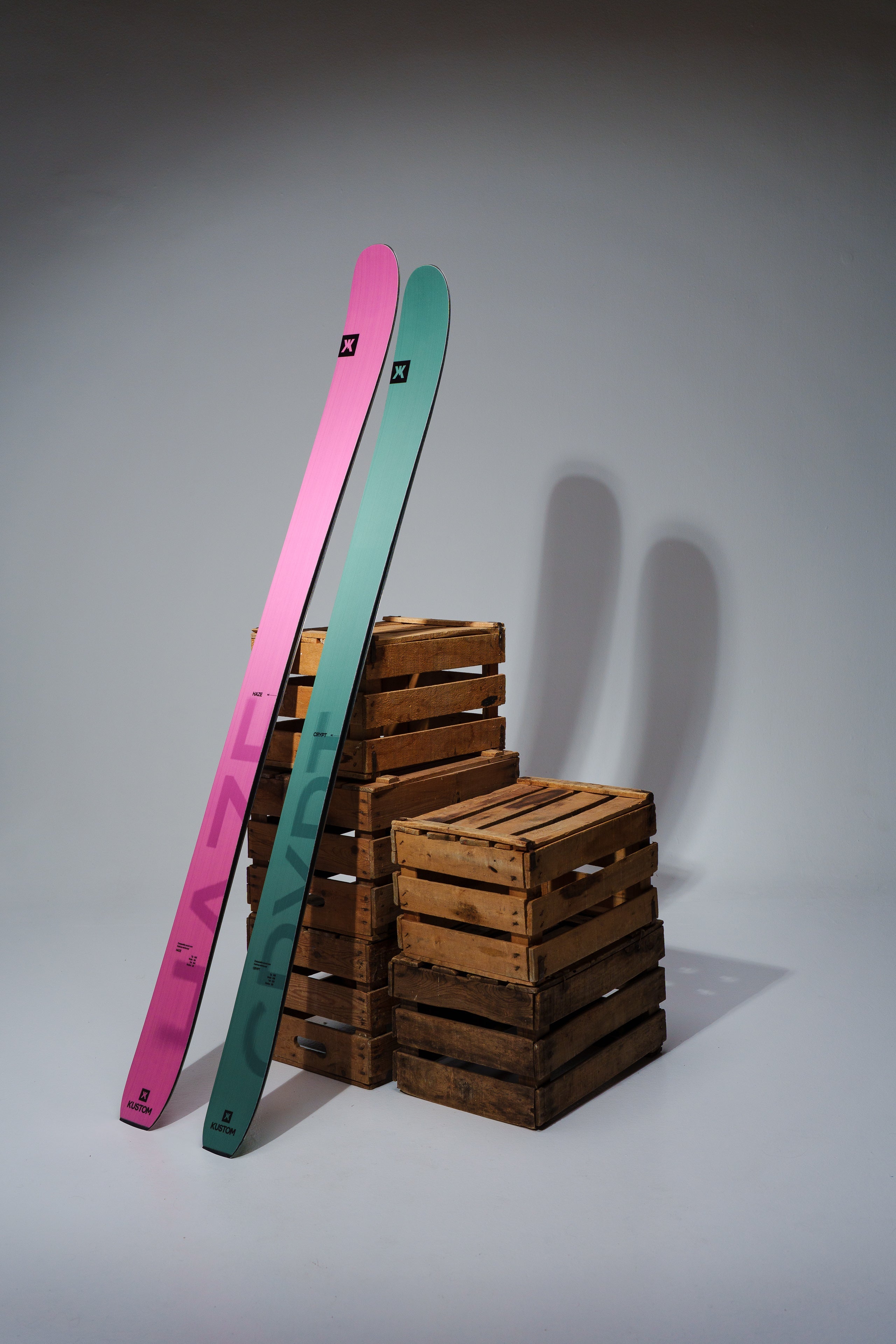

Manufacturing skis in Spain is not an easy decision. It's more expensive and leaves no room for hiding mistakes. Every flaw is scrutinized closely, and quickly. There's no physical or mental distance between what's designed and what's actually skied. Precisely for this reason, development progresses faster: because it forces you to confront problems head-on without postponing or delegating them.
At KUSTOM, the factory and the test range are separated by mere minutes. A ski is designed, manufactured, and tested within the same operational environment. If something isn't working, it goes back to the workshop while the season is still underway. Learning doesn't freeze until the following winter, and pending decisions don't pile up. Our product is in a constant state of improvement.

When development takes place far removed from the ski industry, the process becomes rigid. Design is finalized prematurely, production is outsourced, and testing is concentrated in very specific timeframes. Every change requires justification, coordination, and waiting. This leads to accepting solutions that work "enough," even if they aren't the best. The industrial timeline ends up taking precedence over actual performance on the snow.
There's no filter here. The same team that designs the skis manufactures and tests them. There are no intermediaries or interpretations of feedback. If a prototype fails on hard snow, it's adjusted. If it performs better than expected, it's refined. Decisions aren't negotiated: they're made on the ground and implemented in the workshop, without any background noise.
Testing in Sierra Nevada allows for something unusual in the industry: continuity. Conditions change rapidly, forcing a rapid response. Dry cold, heat waves, fog, transformed snow. The ski faces all of this while still in its development phase. These aren't isolated tests, but rather a succession of days that refine the product with real, accumulated, and consistent data.
That short cycle—manufacture, test, refine—is what accelerates development. Not because we work in a hurry, but because there's no external friction. By not depending on suppliers, we don't develop to fit someone else's schedule. We develop to better understand skiing. We can discard solutions that work on paper and focus on small adjustments that, on the mountain, make all the difference.

Manufacturing in Spain also means accepting limitations. You can't produce in large volumes without losing control, and we're not aiming to do that. Skis aren't a fast-moving commodity. They're a tool that's refined through use and trial and error. Having production close by means we have to take ownership of every decision and every mistake firsthand.
That's why manufacturing here changes the outcome. Not because of the origin, but because of exposure. When you can't take your eyes off what's wrong, you learn faster. And that learning shows when you're skiing.

