

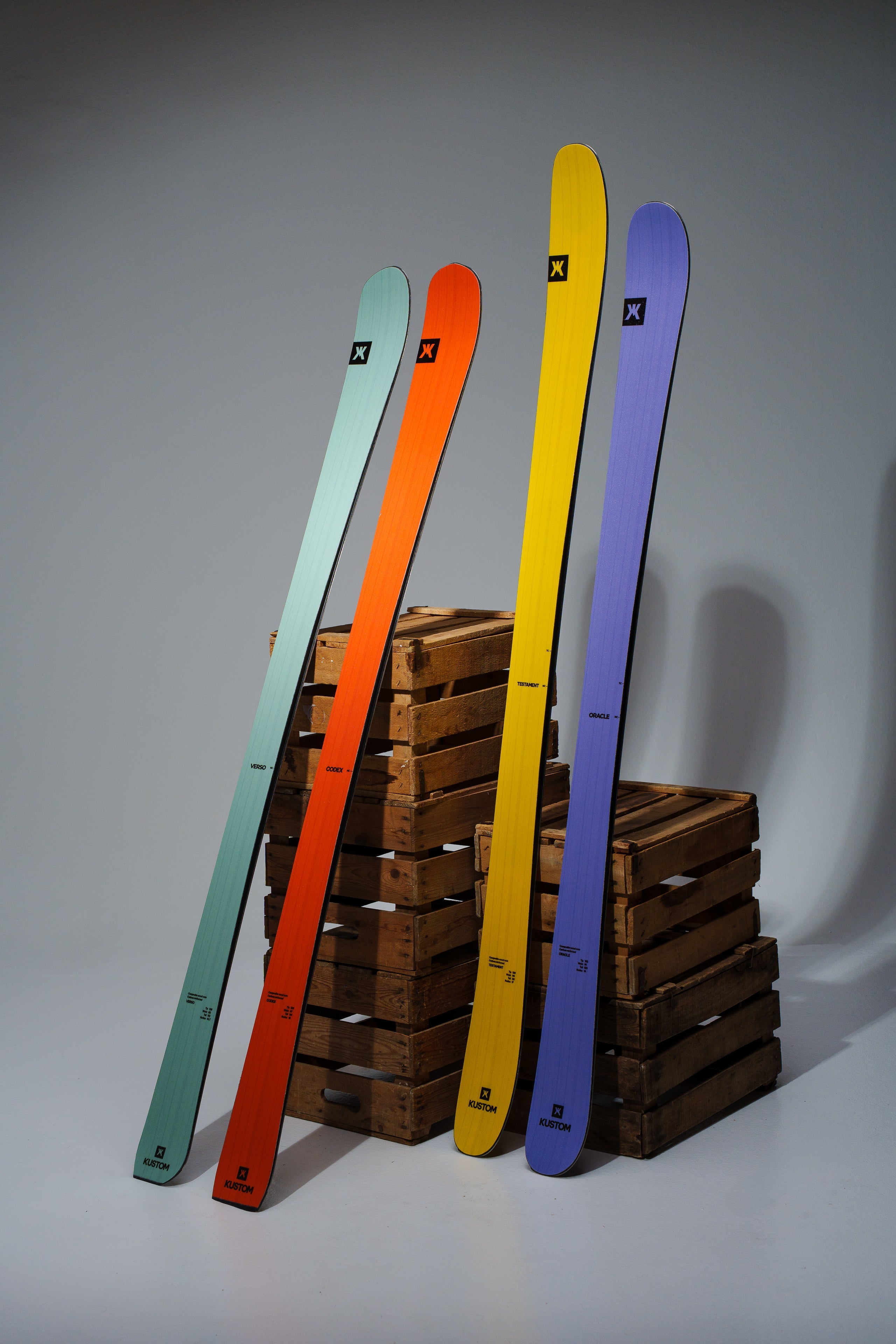
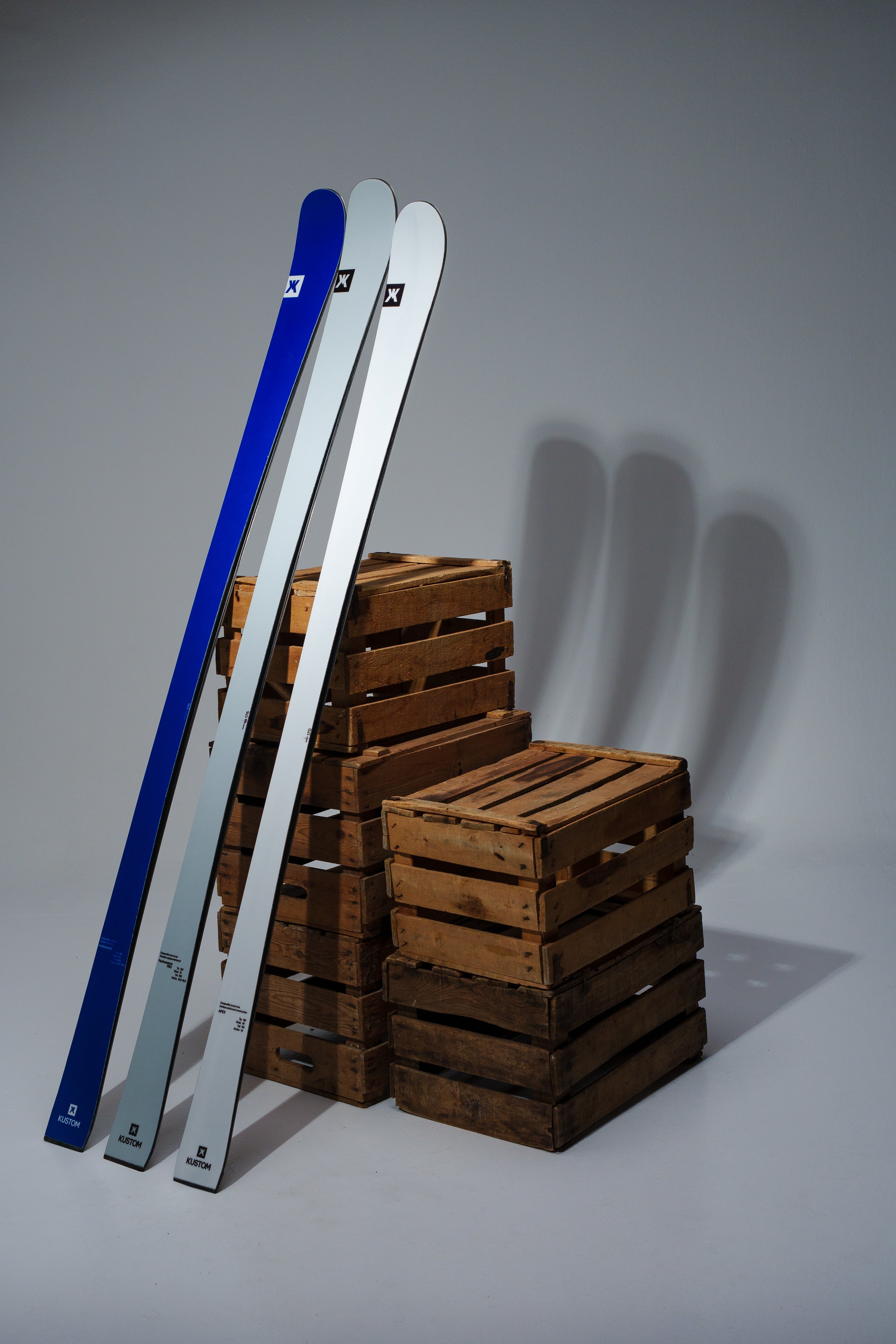
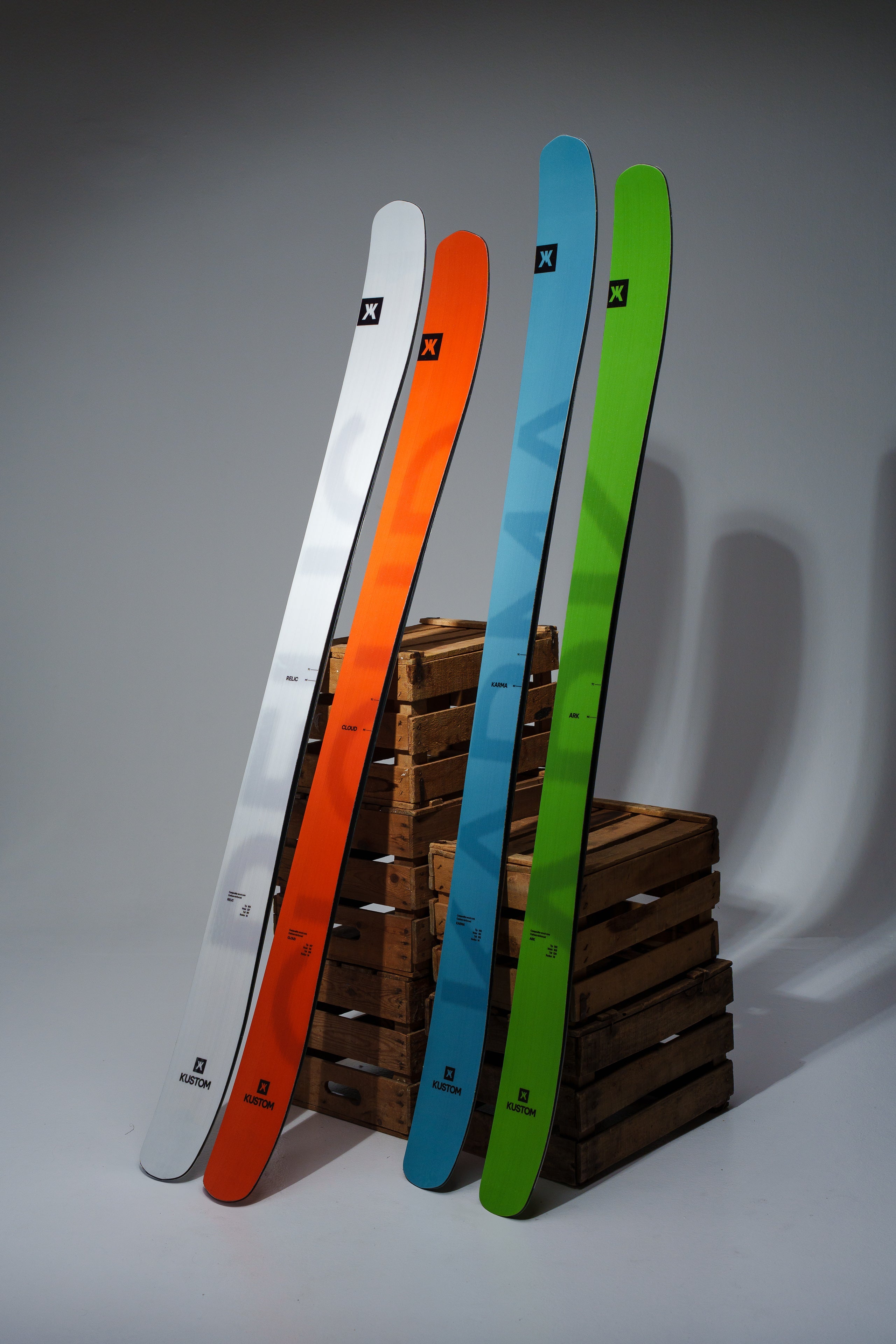

For a long time, off-piste skiing was the domain of a minority. It wasn't the heart of the resort, the focus of marketing, or the most prominent feature in brochures. It was, simply, the raw mountain: variable snow, unpredictable terrain, and challenging conditions.
Today, big mountain climbing is no longer the exception but the culture. Not because it's easier—it remains demanding—but because several factors have converged to change the ecosystem: better equipment, greater media visibility, increased professionalization, and a much more mature conversation about safety.
The result is clear: wide skis are no longer a niche category. They are now a standard tool in contemporary technical skiing.
From the perfect slope to the real terrain
Fifteen or twenty years ago, off-piste skiing meant accepting clear limitations of the equipment. Narrow skis, poor float, demanding tails, and an unforgiving response on broken snow. Off-piste was physically more demanding because skis weren't designed to follow the terrain; they were designed to dominate the slopes.
The so-called "shaping revolution" changed that balance. The widespread incorporation of rocker and early rise, along with the progressive increase in underfoot depth, redefined the relationship between skier and snow. Floatation ceased to depend exclusively on technique and began to rely also on geometry.
What's interesting is that wide skis didn't just become extreme. There was a phase of extreme ski widths: 120 mm, 130 mm, or more. Over time, the market found a balance: widths that allow for real float, but without sacrificing stability, precision, and the ability to read the terrain when the snow changes.
That sweet spot is the natural territory of the modern big mountain.
When freeride creates an industry
The rise of off-piste skiing isn't just technical; it's cultural. Brands like DPS and Blackcrows weren't created to appeal to the entire market. They were created to deliver a specific feeling: stability at speed, efficient floatation, and consistent performance on technical terrain.
DPS, founded in 2005 by Peter Turner and Stephan Drake, pioneered the intensive use of composites and an almost engineering-like approach to powder ski construction. Blackcrows, based in Chamonix, articulated an identity where performance and visual character merge into a single contemporary alpine discourse.
What is relevant is not the brand names, but the paradigm shift they caused: freeride ceased to be a secondary line within the catalog of large manufacturers and became a strategic category.
When a discipline generates specialized brands, it means that it has ceased to be marginal.
The circuit as an amplifier
The Freeride World Tour has been another decisive catalyst. It transformed what was once cult cinema or video segments into a competitive narrative with rules, judging criteria, and global visibility.
Broadcasting with drones, multiple cameras, and streaming has allowed the public to better understand the chosen line, risk management, and technical execution. This changes the perception of the sport: it ceases to be a "wild" descent and becomes a strategic reading of the terrain.
The integration of the circuit with the FIS in 2022 also marks a step towards a more institutional structure. More governance, more standardization, and greater international reach. Freeride no longer exists solely in the realm of aesthetics; it also thrives within a consolidated sporting framework.
Security: the other big change
To talk about the rise of big mountain skiing without talking about safety would be incomplete. Off-piste skiing has become more popular, but it has also become more conscious.
The basic kit—avalanche transceiver, shovel, probe, helmet, and airbag—has become standardized. It's mandatory in competitions and increasingly common in recreational settings. Furthermore, access to training and snow reports is much greater than it was two decades ago.
This isn't about dramatizing the situation, but about understanding that professionalization also implies maturity. Today, there's more talk about decision-making than about bravery. And that's a good sign for the cultural sustainability of the big mountain.
Why wide skiing is here to stay
The rise of big mountain climbing is not an aesthetic fad. It is the convergence of four clear forces:
-
A cultural desire for authentic mountain life.
-
A technical evolution that makes variable terrain more skiable.
-
The creative pressure of brands born from freeride.
-
A competitive and media-driven ecosystem that amplifies and professionalizes the discipline.
Wide skis are no longer just a symbol. They are a tool designed for real-world conditions.
Our vision of the Big Mountain
At KUSTOM®, big mountaineering is not an opportunistic category. It is a logical consequence of how we understand the mountains: as a changing environment where equipment should provide mental stability, not noise.
We're not looking for exaggeration. We're looking for calm under pressure.
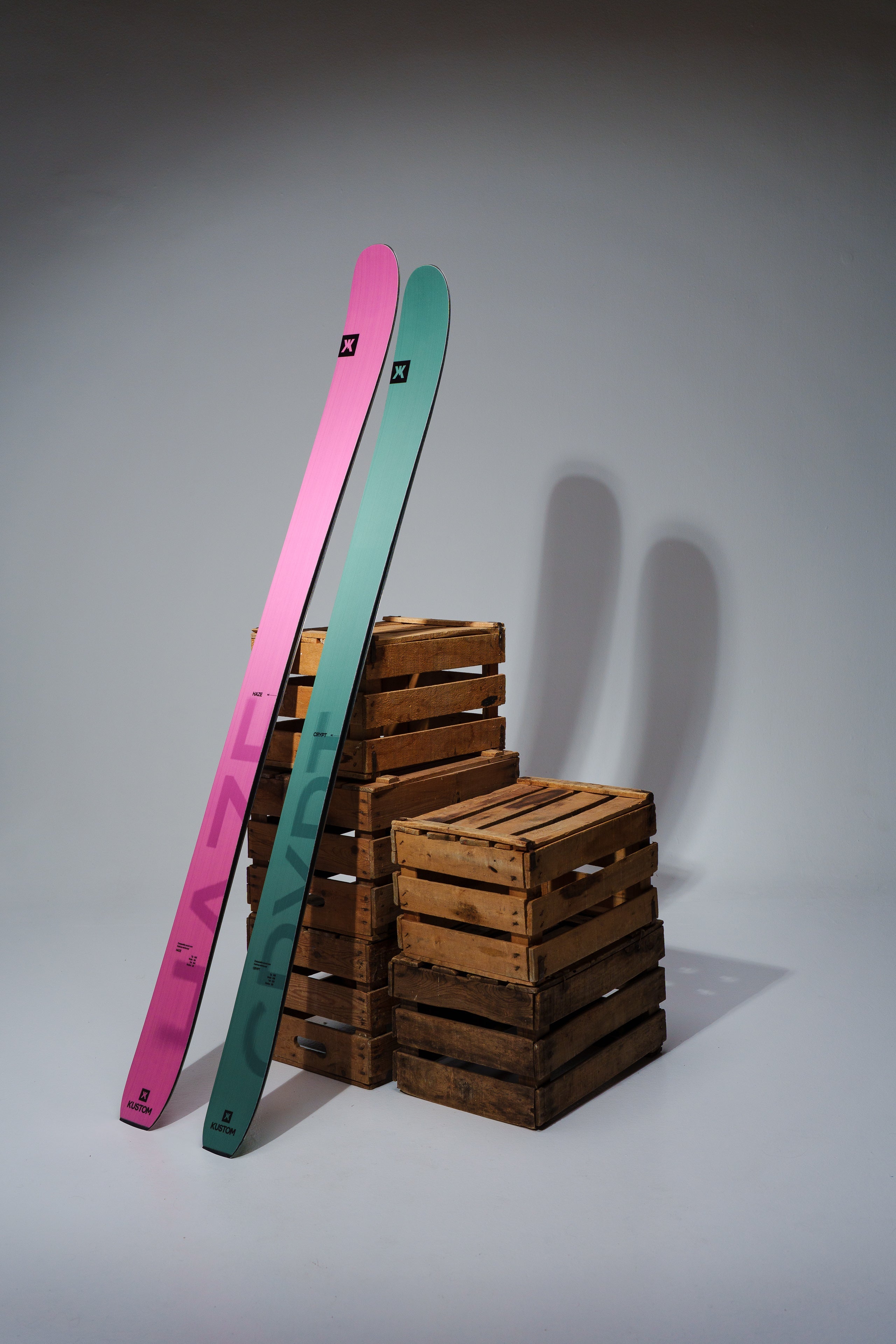
The CRYPT (108 mm) embodies that balance. It's a ski designed for decisive descents when the slope demands commitment. It floats naturally in deep snow, yet maintains precision when the terrain becomes hard or exposed. Underfoot, it delivers a solid and controlled feel, even when the snow changes. It allows you to go fast without constant corrections; it follows the line and doesn't lose its composure when the pace increases.

The HAZE (114 mm) takes that concept a step further. More float for truly deep days, but with the same structural stability. It's a ski for aggressive terrain and high speeds, where loose snow could otherwise reduce power transfer. Here, it doesn't. It maintains stability and absorbs impacts naturally, allowing energy to stay on the line, not in correction.

At a time when big mountain climbing is more visible, more technical, and more demanding than ever, we believe the best response isn't spectacle. It's conscious design.
